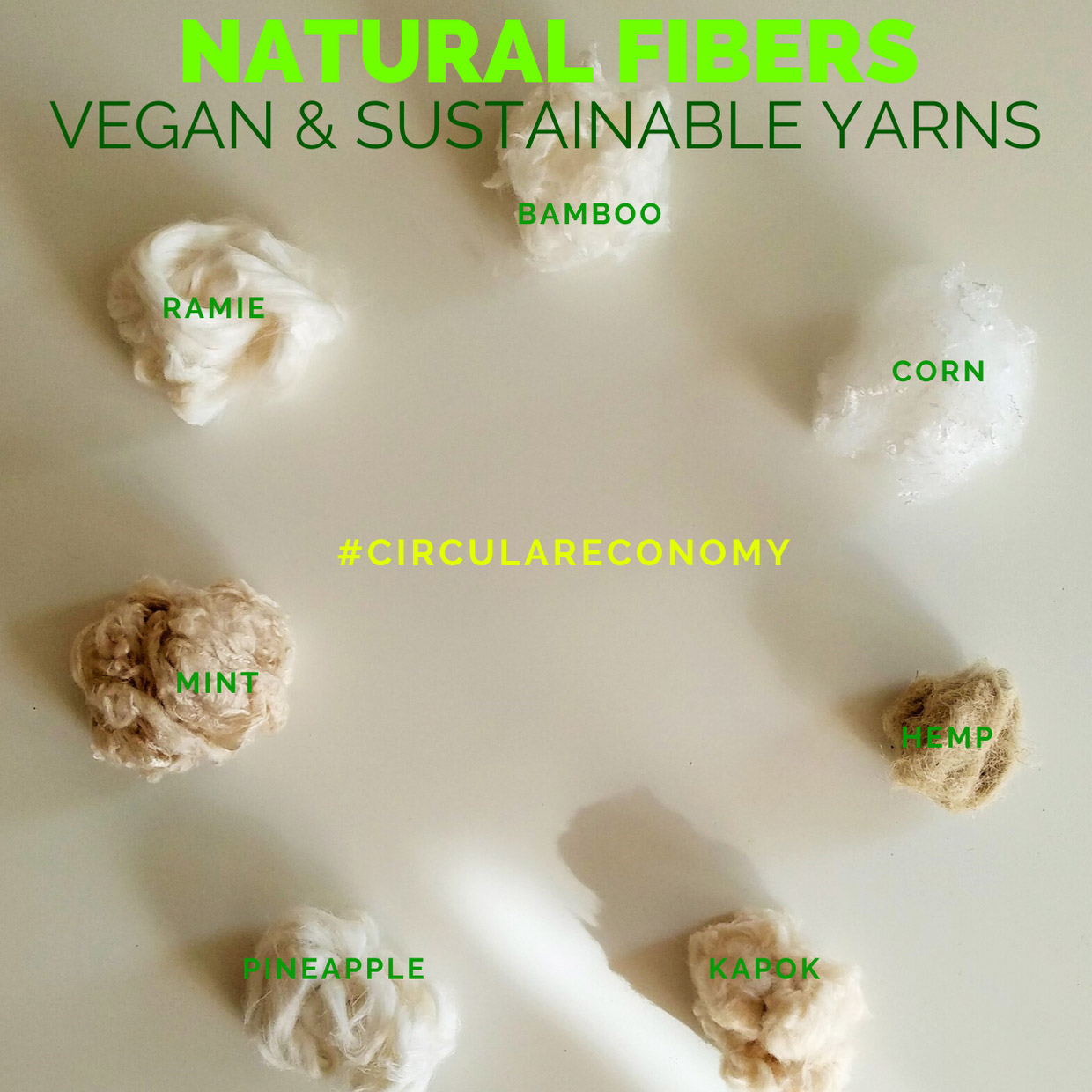
In Hilaturas Arnau Barcelona we work with natural fibers of plant origin such as pineapple, kapok, hemp and banana, selected for their unique characteristics and low environmental impact. From them we develop sustainable yarns and fabrics, combining textile tradition and innovation to create high-quality, biodegradable materials that respect the environment.
Our commitment is to offer solutions that combine technical performance and environmental responsibility, promoting a new generation of natural textiles adapted to today’s demands.
PINEAPPLE
Pineapple Yarns by Hilaturas Arnau Barcelona
The natural fibers from pineapple leaves return to our carding machines.
The yarns extracted from pineapple leaves are a sustainable alternative to traditional textile fibers. They are obtained from pineapple harvest waste, avoiding disposal and reducing environmental pollution.
Characteristics
Natural material: extracted from the leaves of the pineapple plant (Ananas comosus).
Lightweight and strong: fine yet durable fibers, comparable to linen or hemp.
Biodegradable: decomposes naturally without leaving toxic residues.
Versatile texture: can be soft or coarse depending on the manufacturing process.
High dye absorption: allows vibrant dyeing without harsh chemicals.
Advantages
Sustainability: uses agricultural waste without the need for additional crops.
Eco-friendly alternative: can replace synthetic fibers and reduce dependence on other textiles.
Low environmental impact: requires little water and few pesticides.
Job creation: supports local economies in pineapple-producing regions.
Benefits for the planet
Reduction of agricultural waste: avoids burning and decomposition of pineapple leaves that emit pollutants.
Lower use of water and chemicals: compared to other textile fibers, its production is more environmentally friendly.
Reduction of textile plastics: can replace petroleum-derived synthetic fibers, reducing plastic pollution.
Promotion of the circular economy: gives new value to agricultural waste.
BANANA YARNS
Banana yarns come from the use of banana plant stems, an agricultural by-product that was traditionally discarded. This natural, strong and flexible fiber has become an excellent ecological alternative in the sustainable textile sector. Its silky appearance, breathability and 100% plant origin make it an innovative and responsible choice.
Characteristics:
Natural material: obtained from the inner fibers of the banana stem (Musa sapientum), through a fully ecological extraction and drying process.
High strength and lightness: combines mechanical durability with very low weight, ideal for technical fabrics or comfortable garments.
Breathable and absorbent: ensures excellent ventilation and moisture management.
Biodegradable: breaks down naturally without releasing pollutants.
Soft and glossy feel: resembles silk or bamboo, with a fluid drape and elegant finish.
Advantages
Use of agricultural waste: transforms banana industry waste into a high-value textile resource.
Low environmental impact: requires no additional crops and uses little water or pesticides.
Versatility: can be blended with cotton, linen, bamboo or recycled fibers to create innovative sustainable fabrics.
Natural comfort: its porous structure improves ventilation and thermal comfort, even in warm climates.
Benefits for the planet
Circular economy: transforms banana waste into new textile products, closing the resource-use loop.
Reduction of agricultural waste: prevents burning or dumping of stems, reducing emissions and pollution.
Responsible production: promotes sustainable rural practices and provides additional income to farming communities.
Plant-based renewable alternative: replaces synthetic fibers and supports a more ethical, environmentally respectful textile industry.
HEMP YARNS
Hemp yarns are one of the oldest plant fibers used by humans and today are making a comeback as a sustainable alternative to synthetic materials and conventional cotton. Their strength, breathability and low environmental impact make them a benchmark in the new generation of ecological fibers.
Characteristics
Natural material: obtained from the stem of the Cannabis sativa plant, grown for industrial use.
High resistance: robust and durable fibers with excellent dimensional stability.
Breathable and antibacterial: excellent ventilation and natural odor-resistant properties.
Biodegradable: decomposes without releasing toxic substances.
Natural and elegant feel: texture can be soft or rustic depending on the spinning process.
Advantages
Sustainability: hemp cultivation requires very little water and almost no pesticides.
Carbon capture: its rapid growth helps absorb large amounts of CO₂ from the atmosphere.
Versatility: can be blended with other natural or recycled fibers to create technical or sustainable fashion fabrics.
Durability: its natural strength ensures long-lasting products.
Benefits for the planet
Soil regeneration: improves soil structure and prevents erosion.
Low resource consumption: needs less water and energy than most textile crops.
Replacement of synthetic fibers: reduces dependence on petroleum-derived materials.
Circular economy: supports a responsible textile model based on renewable, biodegradable resources.
KAPOK YARNS
Kapok is a plant fiber obtained from the pod of the Ceiba pentandra tree, also known as the “silk-cotton tree.” Light, soft and naturally sustainable, this fiber represents an ecological alternative to synthetic materials and conventional cotton.
Characteristics
Natural material: comes from the fruit of the kapok tree, a tropical species that does not require intensive cultivation.
Ultralight and silky: extremely fine, hollow fibers lighter than cotton.
Hypoallergenic: its purity and plant origin make it ideal for sensitive skin.
Water-repellent and insulating: hollow fibers trap air, providing buoyancy and natural thermal properties.
Biodegradable: decomposes without generating toxic waste.
Advantages
Sustainability: kapok is harvested from wild trees, without logging or irrigation.
Natural use: requires no pesticides, fertilizers or chemicals during production.
Versatility: can be blended with other natural or recycled fibers to enhance textile performance.
Natural comfort: provides lightness, softness and breathability to fabrics.
Benefits for the planet
Conservation of ecosystems: promotes responsible use of forest resources without deforestation.
Water and energy savings: its production has minimal environmental impact.
Reduction of synthetic fibers: helps decrease the plastic footprint in the textile sector.
Circular economy: gives new value to a renewable, sustainable natural resource and promotes a more responsible textile model.
If you would like advice or additional information, please do not hesitate to contact us — you will receive a response shortly.